
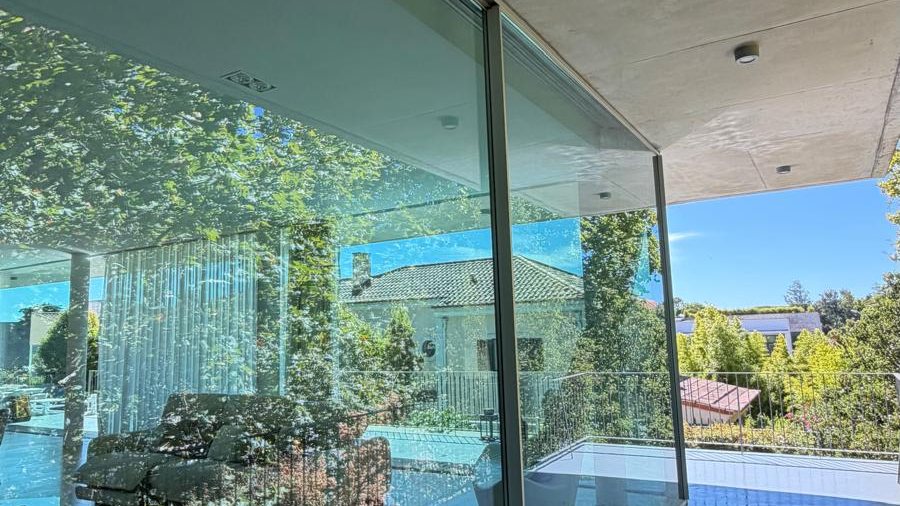
Fixed and sliding glazingFrames and glass balustradesPane by pane, in one direction
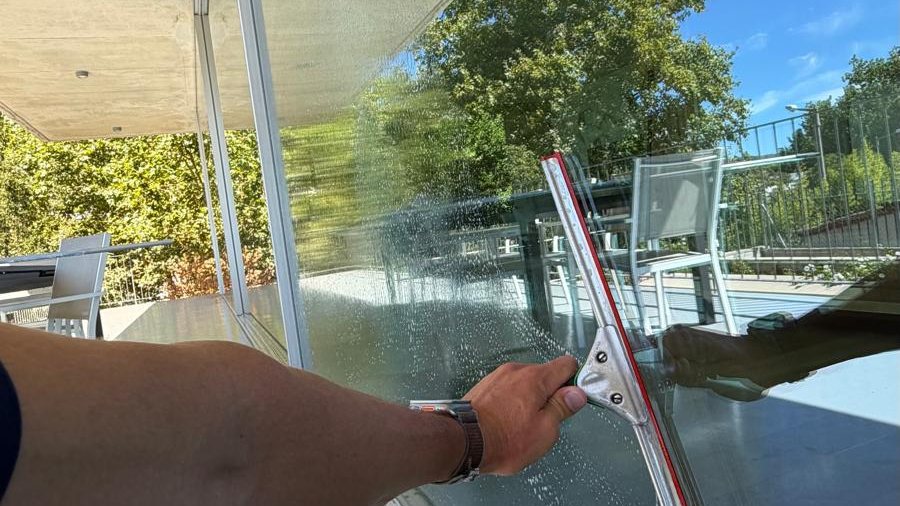
Rope access cleaning of glazing, window frames and facade cladding, on residential and commercial buildings. No scaffolding, no powered access platforms and no disruption to life in the building.
Site visit and quote with no obligation. We reply within 24 working hours.
If you recognise any of these on your building, cleaning has stopped being cosmetic and become maintenance.
We assess the cladding, how heavily soiled it is and the anchor points available.
Method statement, risk assessment and protection of the areas at ground level.
We work down in vertical drops, using products suited to each type of cladding, and collect the waste.
Final walk-round with the client and handover of the before-and-after photographic report.
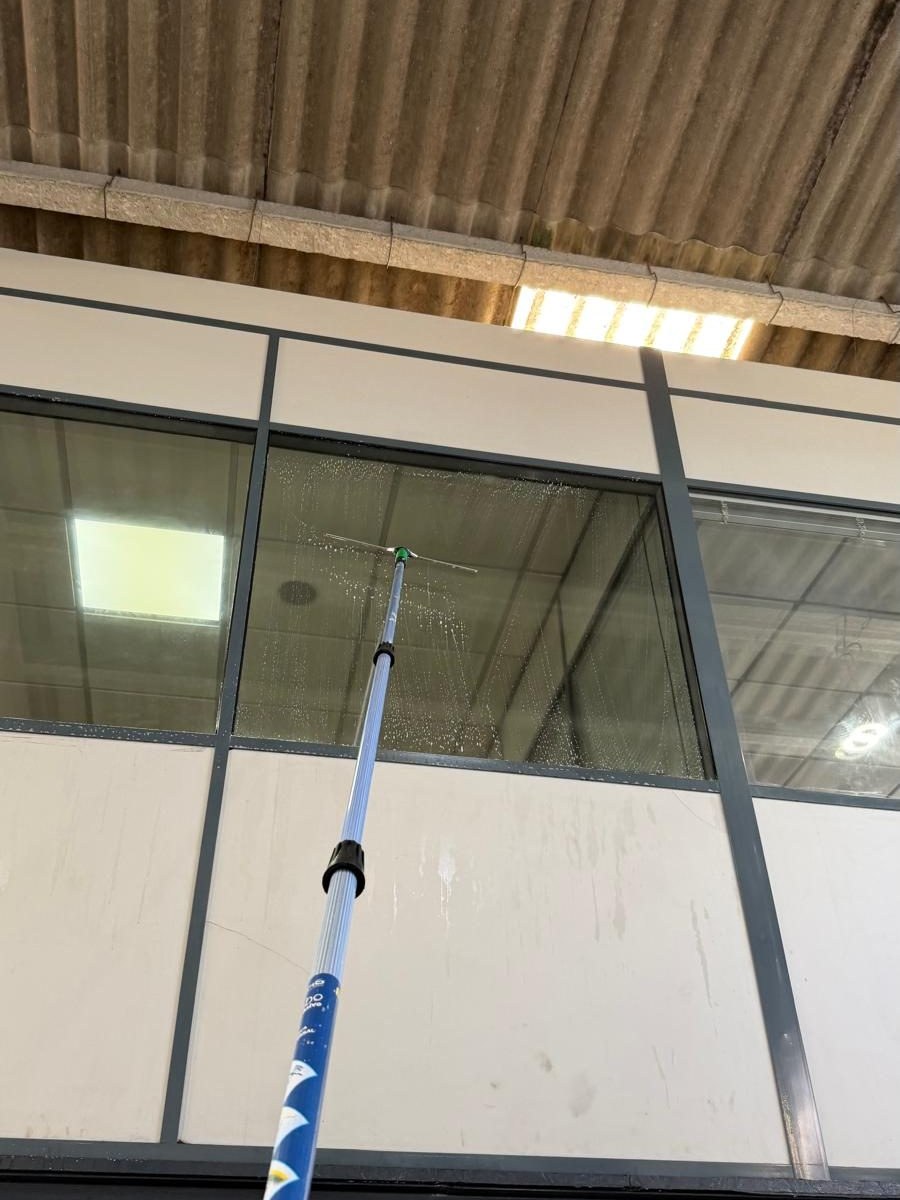
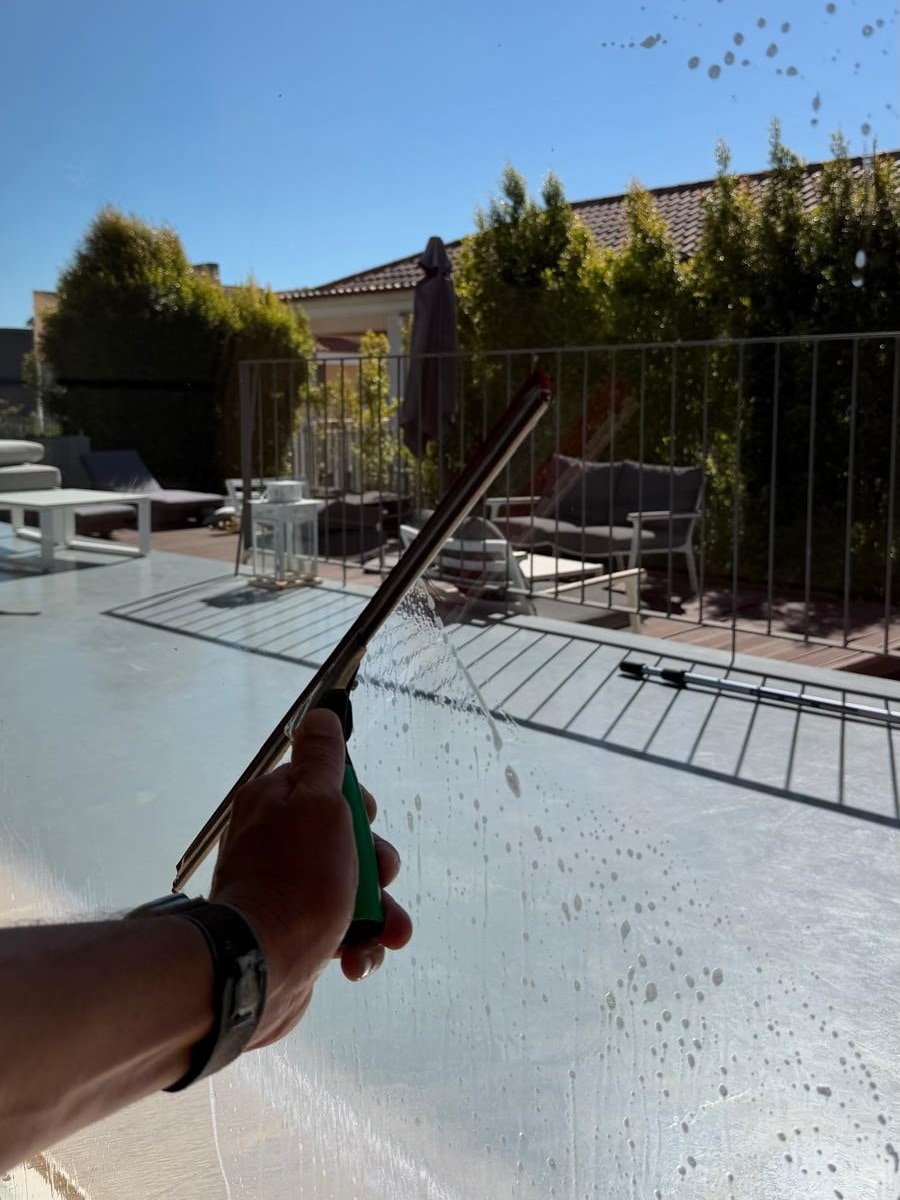
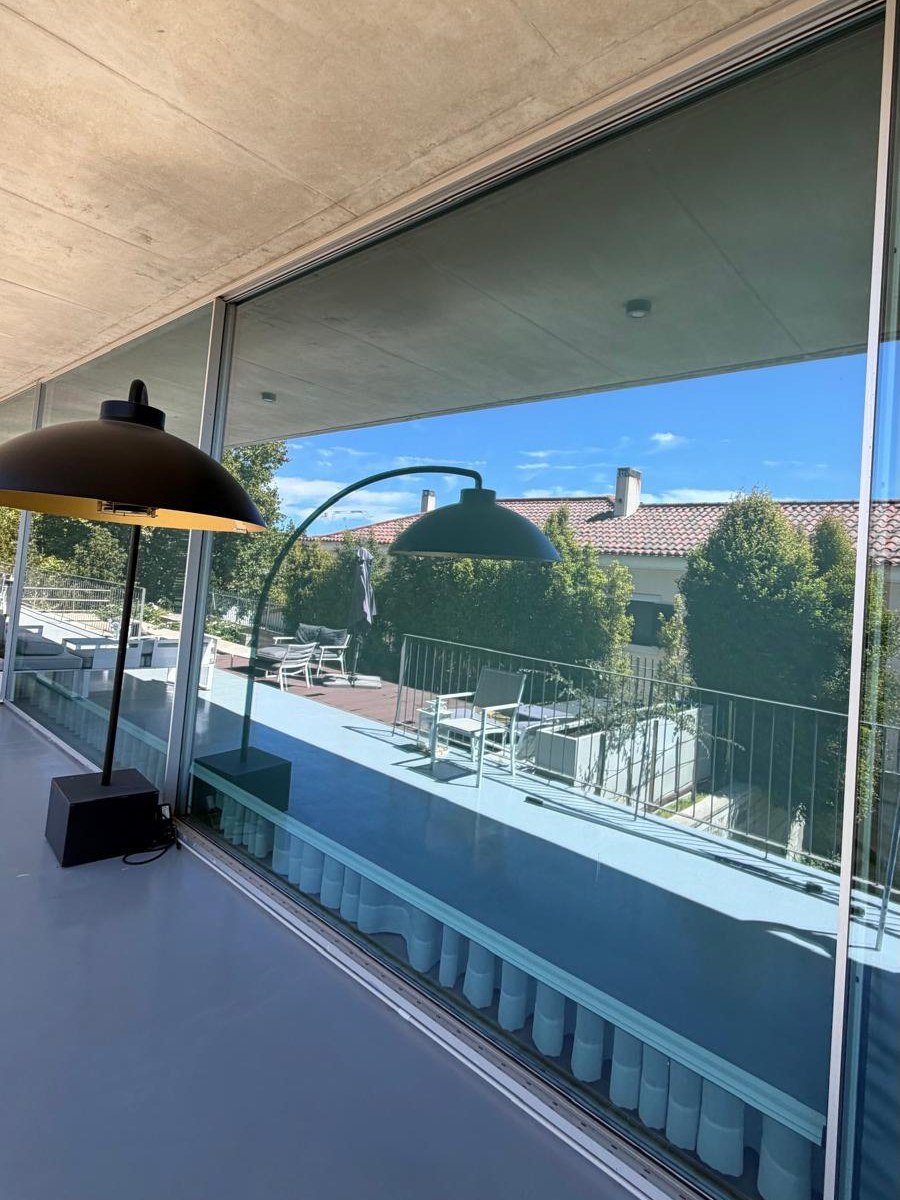
Continuous panes are the case where a mark shows up all at once: one uneven pass and the reflection gives it away over the full height. The work goes pane by pane, always in the same direction, with the squeegee leaving by the same edge and the water taken off before it dries on the frame. What you see here is the result against the light, which is where glass is hardest to flatter.
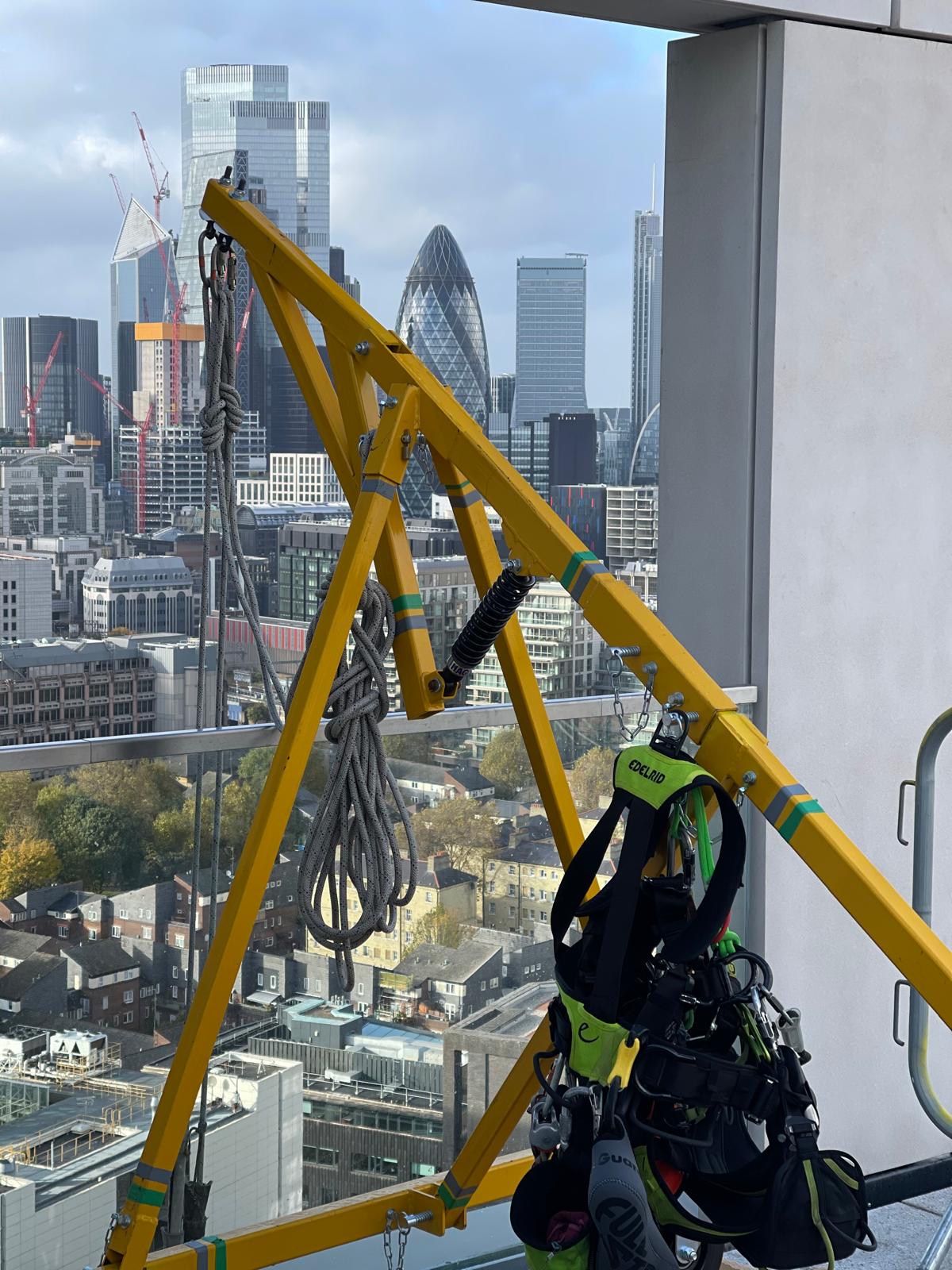
Cleaning on rope is only worth it if it is done under the conditions the law sets out. The system is always twin-rope, on independent anchor points, and the area below the works is cordoned off before any technician goes over the edge — wet glass runs, and the water and the debris always come down.
We give a preliminary figure from photographs and a fixed quote after the site visit, always free of charge.
When washing is no longer enough and the paint needs redoing.
See service →Moss and lichen hold water and spread to the facade.
See service →Whatever runs off the facade ends up settling on the paving.
See service →We use products suited to each type of cladding, with controlled pH, and never excessive pressure on joints or window frames. Sensitive areas at ground level and the balconies below the working zone are protected before we start.
It depends on exposure. In urban or coastal locations, glazing benefits from 2 to 4 cleans a year and the cladding from a wash every 2 to 4 years. A maintenance contract on a fixed cycle works out cheaper than one-off visits.
Yes, with a specific treatment. We first assess whether the mark sits on the surface or whether the glass has been etched, and we tell you plainly what can be recovered before we quote.
A water point helps, but it is not essential: we work from our own tanks where needed. Requirements are agreed at the site visit and set out in the method statement.
Yes. Horizontal glass picks up far more deposit than vertical glass, and it seldom has any access from inside. We reach it on rope from the anchor points on the structure itself, and work without standing on the glazing, which on most roofs was never built to carry a load.
Yes, and it is the cheapest way to maintain a glazed facade. With the dates set in advance, the soiling never reaches the point where it needs a specific treatment, and the price per visit is lower than for a one-off job.
With photographs of the glazed panes and of the cladding we can give a preliminary figure before the site visit even happens.
+351 933 369 927