
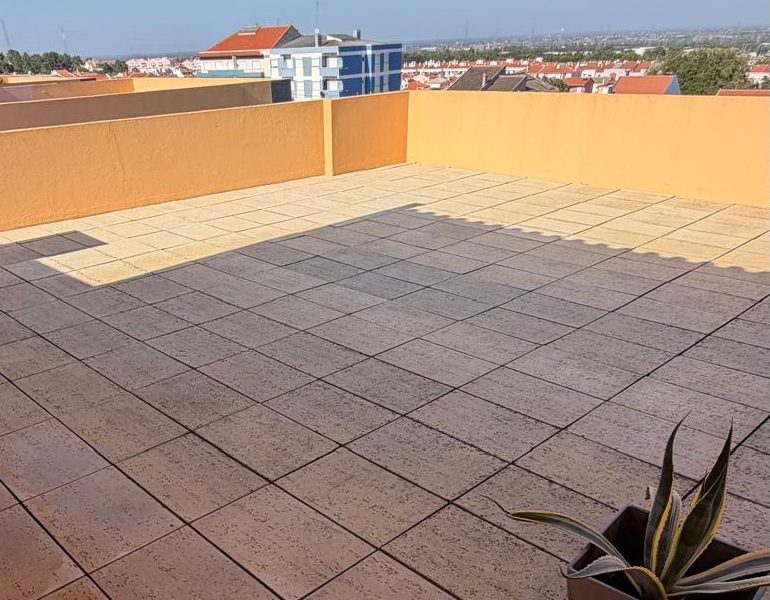
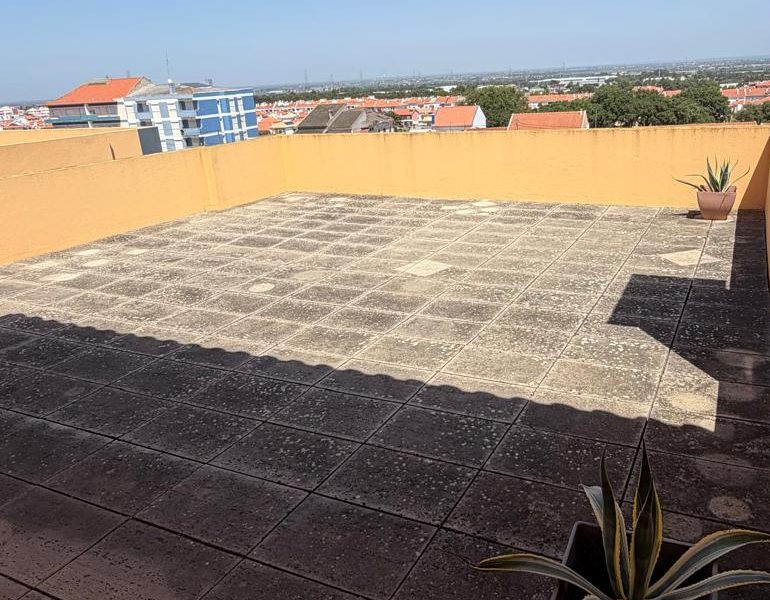
BEFORE
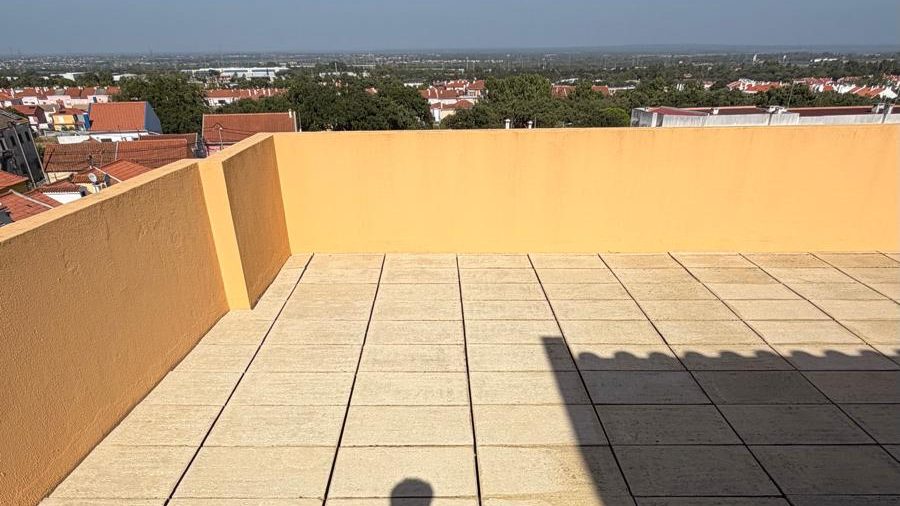
AFTER
External paving is porous: it takes up water, holds dirt and gives moss, algae and limescale something to grow on. After a few winters the terrace changes colour — and once it is wet, it has less grip than it had. We wash at a pressure matched to the material, treat the growth at the root and carry the dirty water off the paving rather than into the nearest drain.
Site visit and quote with no obligation. We reply within 24 working hours.
External paving goes off slowly, and always in the same places: where the sun never reaches, where water stands and where leaves gather. By the time the staining is visible from the street, the biofilm has been building for several winters.
We identify the paving material, the state of the joints and the route the water takes. Then we test in an out-of-the-way spot: what matters is the lowest pressure that cleans, not the highest the machine will give.
Furniture, planters, equipment and openings are protected or moved. Leaf litter, soil and loose debris come off dry first — under water they spread across the whole area and end up in the drain.
Washing bay by bay, in one direction and at the distance settled in the test, so no pass leaves a mark. Where there is moss and algae, the treatment follows, going after what is left gripping the porosity.
The dirty water is directed and collected, not pushed into the nearest drain with the muck still in it. At the end we clear the drains and gutters, rinse the paving down and walk the terrace with the client, handing over the before-and-after photographic report.
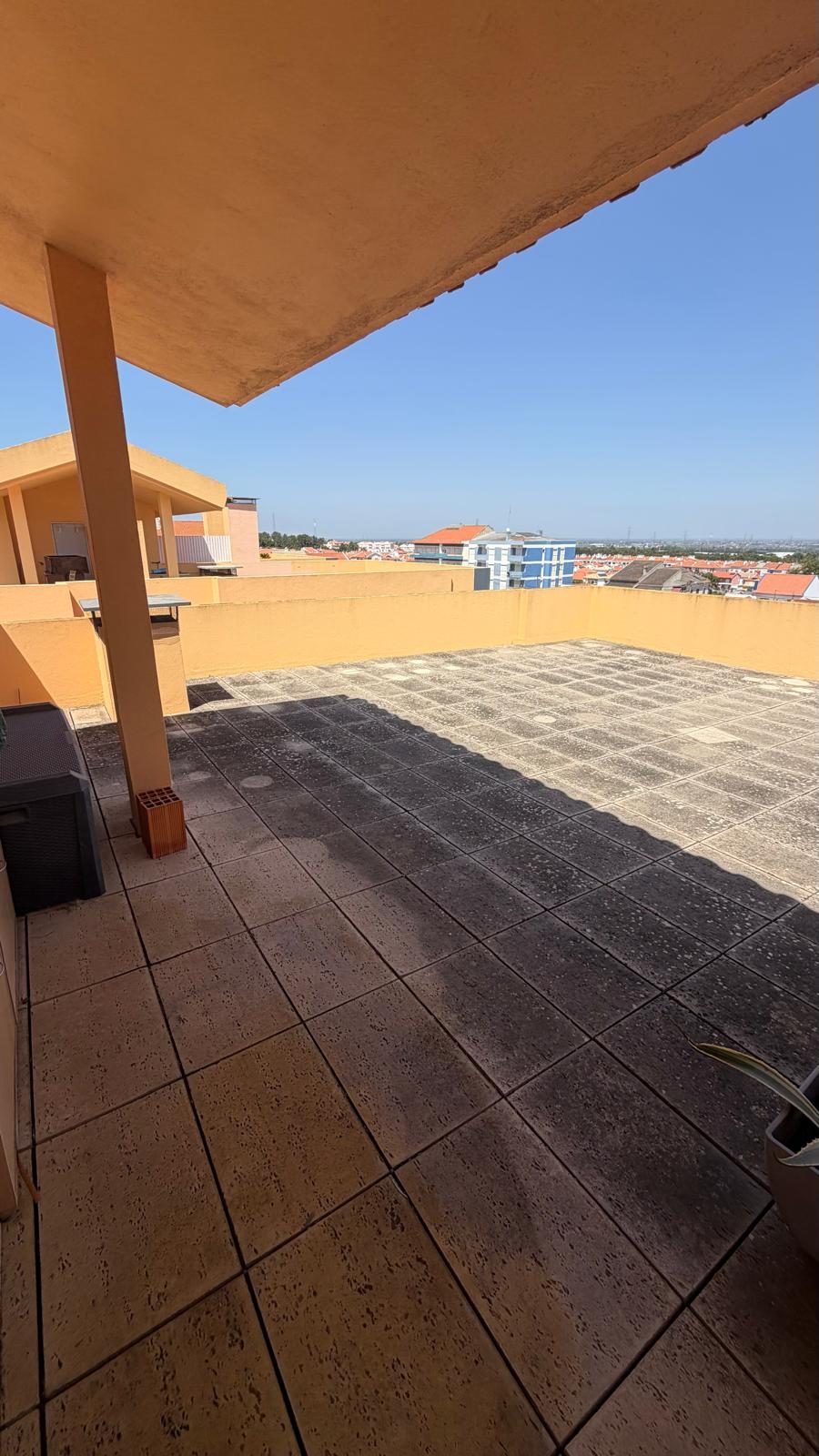
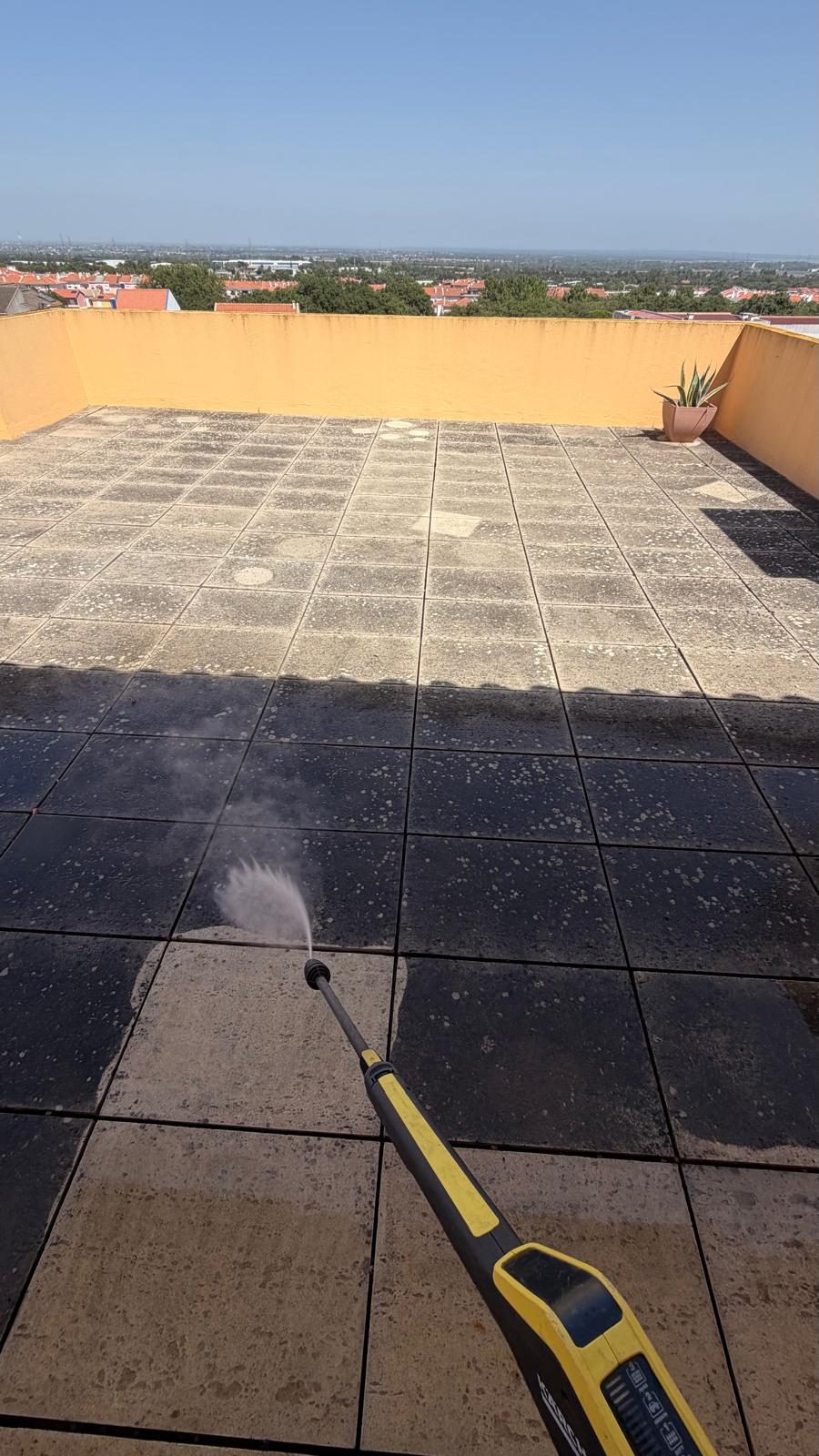
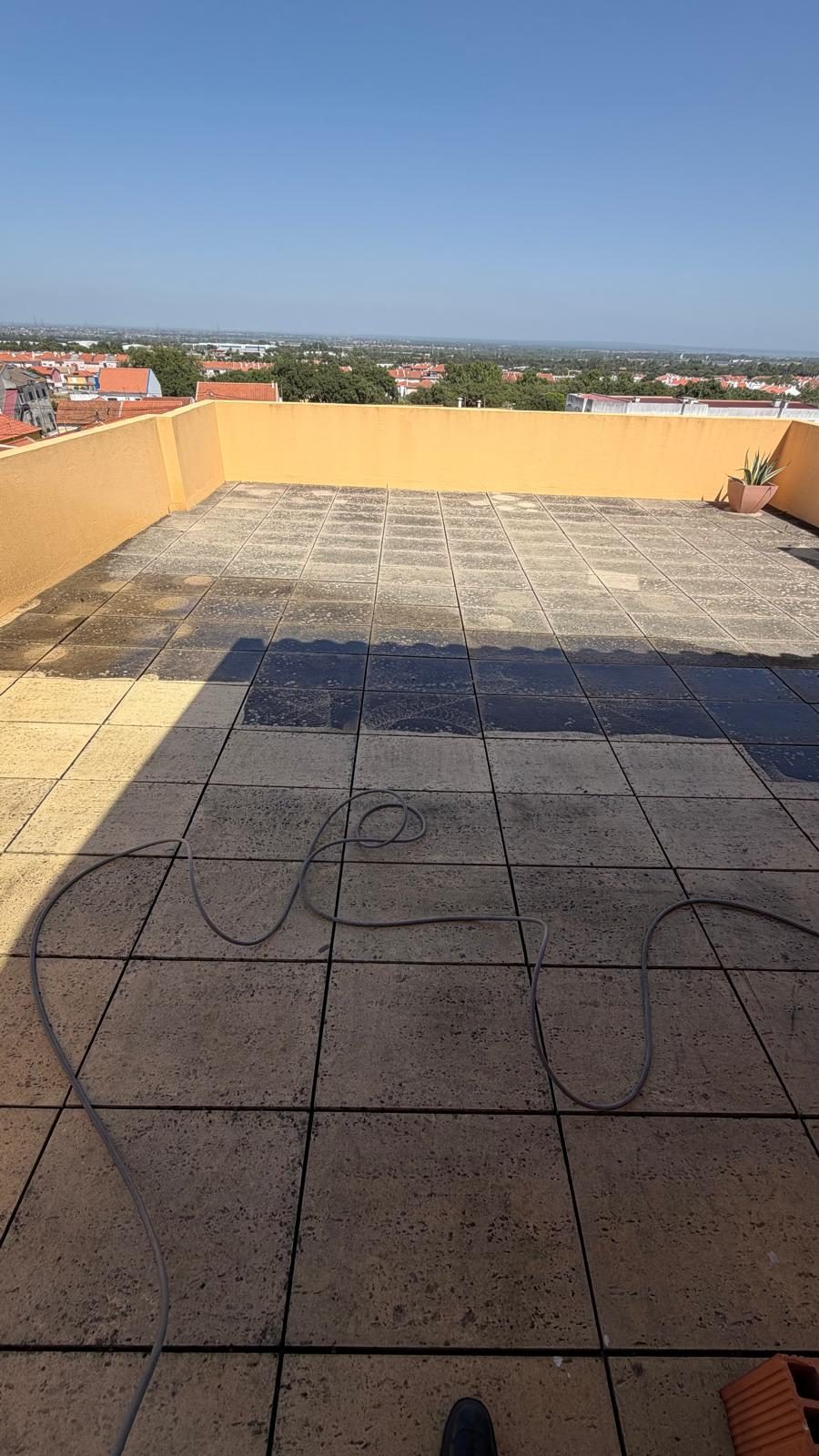
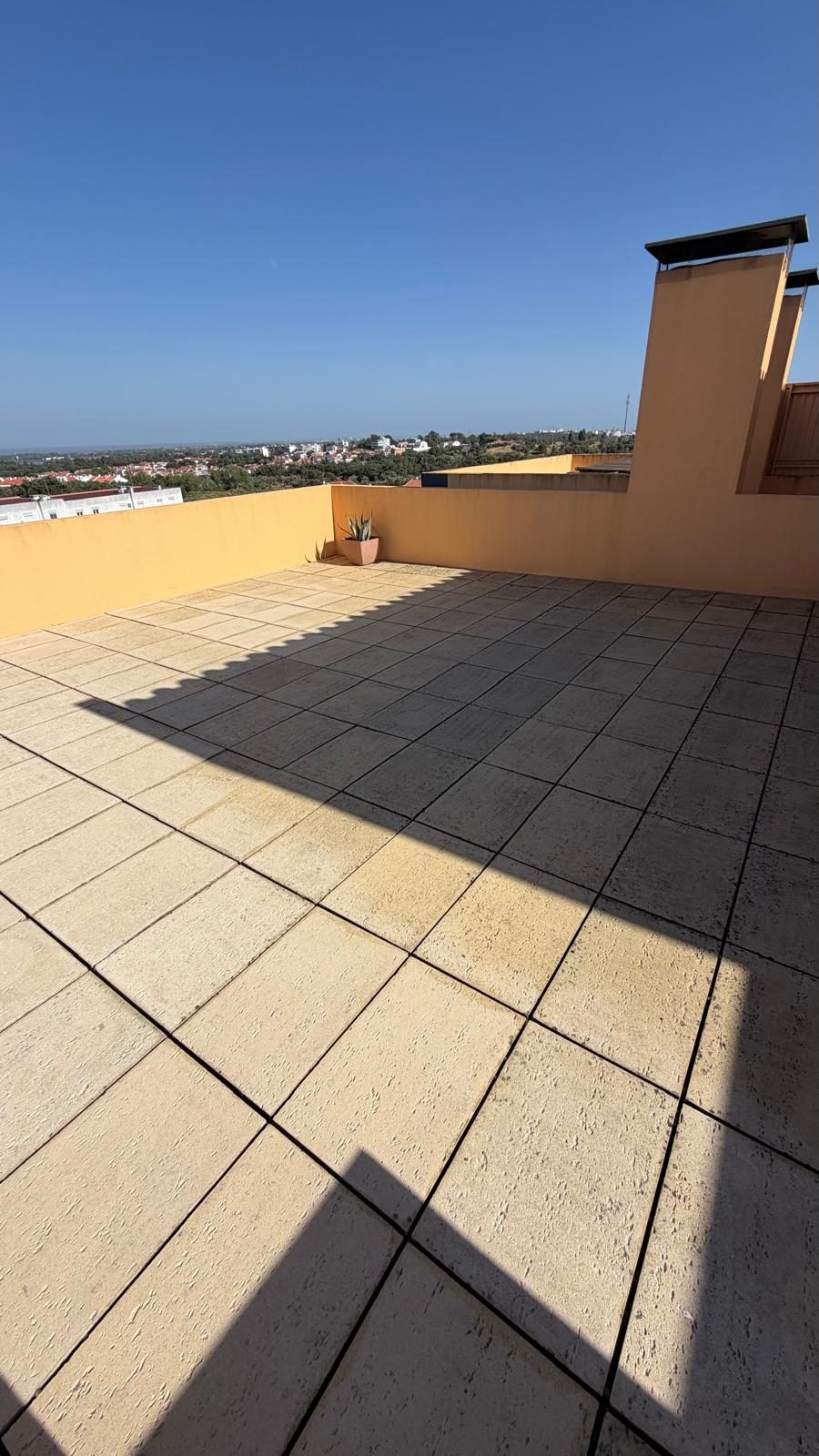
The slabs were evenly darkened, with a whitish crust across the most exposed areas and moss established in the joints. The terrace was washed bay by bay, at the same pressure from start to finish so no pass would leave a mark. What you see on the right is not new paving: it is the colour that was underneath.
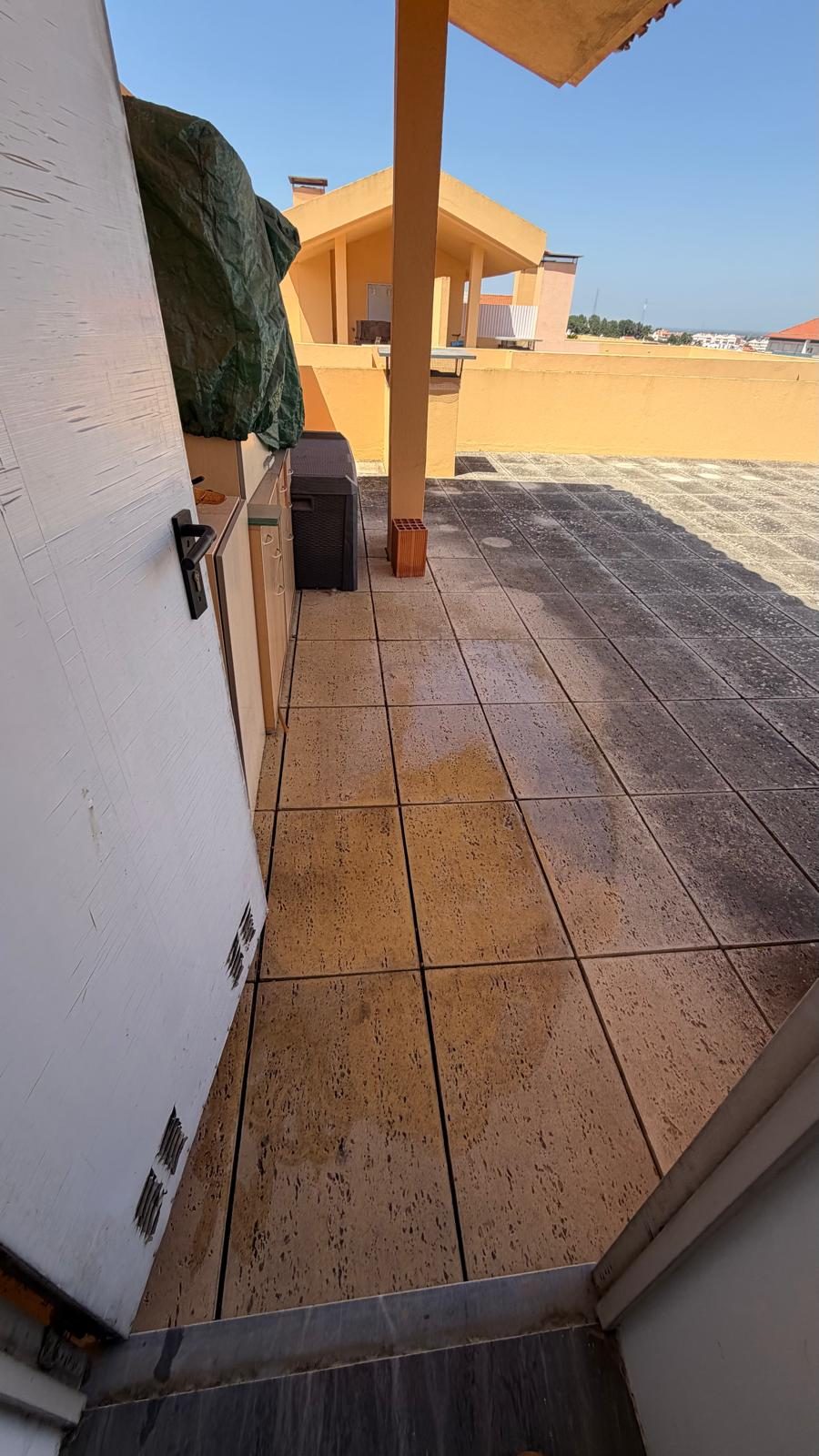
Washing brings the colour back to the slabs and takes away what makes them slippery. It does not close an open joint and it does not replace a membrane. Where there is a stain on the ceiling of the flat below, the problem is in the waterproofing layer under the paving — and that is not treated with water and pressure. In that case we say so at the visit, and show you where it is, before there is any quote for washing.
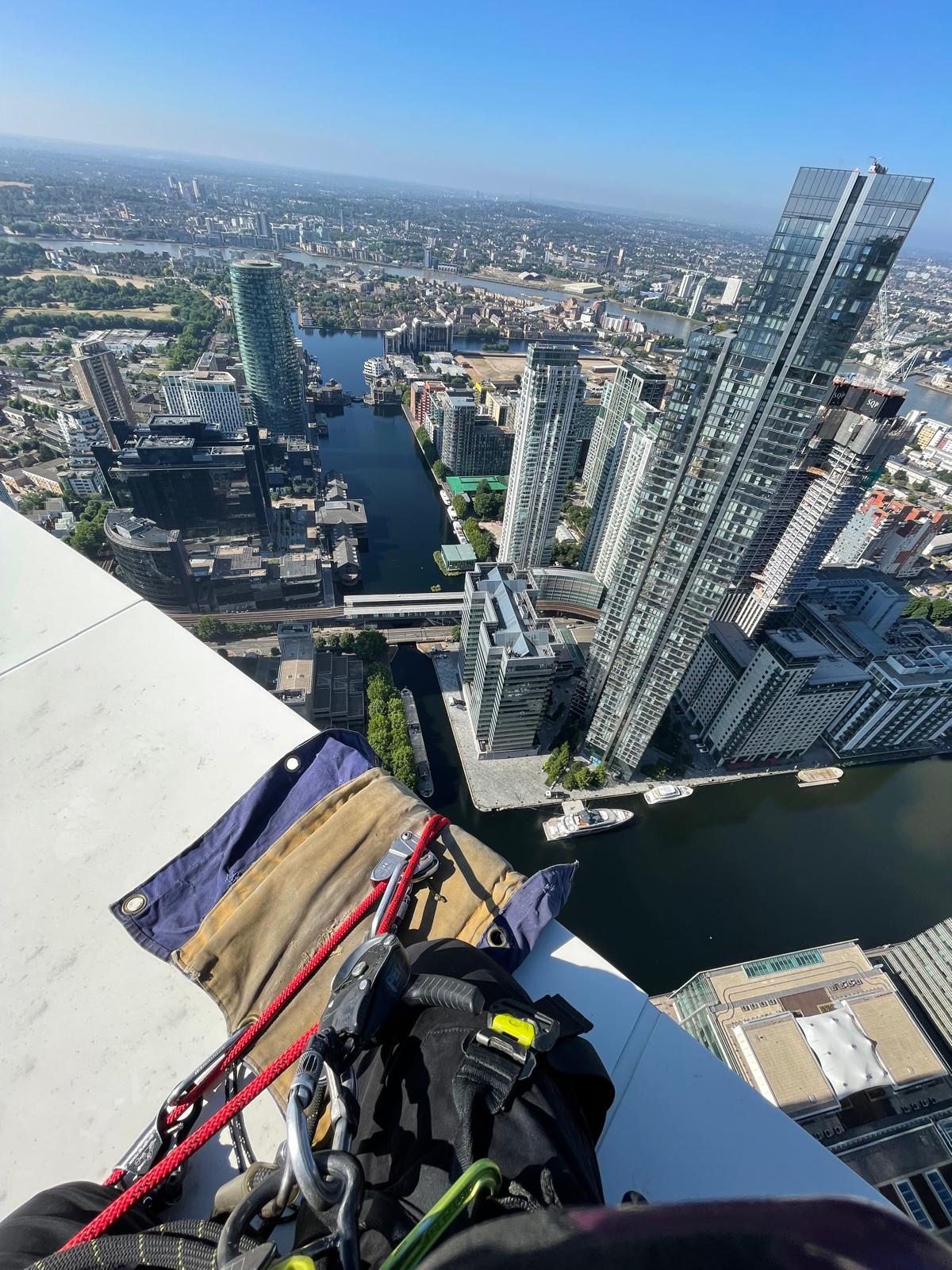
Washing paving looks like ground-level work, and it is, until the strip along the balustrade and the junction with the wall, which are where the lance has to reach and where the slab runs out. On that strip the team works tied on, and on roofs with no access from inside it is rope that gets the machine up there in the first place.
We give a preliminary figure from photographs, and a fixed quote after a site visit — always free of charge.
Once water is reaching the floor below, the problem is beneath the paving.
See service →Moss and lichen on the tiles feed the dirt that washes down onto the terrace and into the gutters.
See service →Glass balustrades, glazing and external walls, dealt with on the same access.
See service →It will, at the wrong pressure. External paving is porous, and a lance held too close or turned up too high opens the surface and strips out the joints — the terrace then dirties faster than before, and carries pass marks that never come out. That is why the pressure and the distance are settled by a test in an out-of-the-way spot before any of the paving is started.
It is not the slab: it is the biofilm growing on it. Algae and moss form a layer that, once wet, has very little grip — and that is where falls happen on terraces and external steps. In a communal space that is a safety matter, not just a question of appearance: it is usually the argument that decides the residents' meeting.
It depends on the exposure. A terrace in full sun, with no trees over it, holds up well for two to three years. In shade, next to planting or in permanent damp, the growth reappears sooner. The treatment applied at the end of the wash holds off the return; without it, whatever is left gripping the porosity grows back in the first winter.
It is directed and collected, not pushed into the nearest drain. What comes off the slabs is soil, moss and crust: send it down the pipe in bulk and it settles there and eventually blocks it. Debris comes off dry wherever possible, and the drains and gutters are left clear at the end of the works.
The paving has to be clear. Furniture, pots and washing lines are moved or protected — we do that at the start and put everything back at the end. If there are fixed, heavy or fragile items, it is better to know at the site visit than on the day of the works.
The washing, yes. It is the moss treatment that needs a few hours without rain after it goes on, or it washes off before it can work. In Portugal that rarely stops the job, but it does govern the day we book.
Yes. It is the same work and the same decision about pressure: balconies, external steps, courtyards, communal access areas and roof terraces. On balconies with glass balustrades, cleaning the glass can be done the same day.
With photographs of the terrace, the joints and the drains we can give you a preliminary figure before the site visit even happens.
+351 933 369 927